How Para-Medical Courses After 12th Prepare You for High-Pressure Medical Roles
Home / MNR Educational Trust / How Para-Medical Courses After 12th Prepare You for High-Pressure Medical Roles
“There is no higher honor than to be given the responsibility to care for another human being”- Richard K. Schachern. This quote by Richard K. Schachern acts as a reminder for the EMS professionals that protecting and supporting another human life is a sacred duty. Hence, A good para-medical course after 12th doesn’t just teach subjects, it quietly trains your brain for the kind of medical work where mistakes have consequences. Worldwide, the burnout of the EMS professionals is visible through the 2025 EMS Trend Survey. As per the reports, 76% of respondents said burnout is a critical issue, and 59% saying they don’t have enough personnel to respond to emergency calls, a blunt indicator of how intense emergency healthcare roles can get.
How para-medical courses after 12th Prepare Students for Emergency Care
The para-medical courses after 12th are normally denoted as PCB, where the study of emergency care is combined with theoretical knowledge and hands-on life-saving techniques. The curriculum discipline of para-medical education is what colleges try to shape early. Hospitals, diagnostic centres, ICUs, and trauma units all run on high-stakes timing, coordination, and technical accuracy and the discipline of how para-medical courses are delivered shapes emergency care.
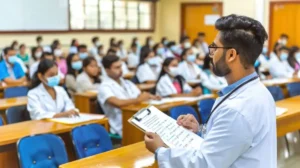
What para-medical courses after 12th actually prepare you for
Here’s what these courses build, almost without announcing it:
- Decision-making under time pressure: You learn to follow steps in the right order when you don’t have the luxury of a slow day.
- Comfort with responsibility: Samples, scans, vitals, airway support, infection control, tiny errors can ripple outward.
- Team rhythm: You stop working like a solo student and start working like a unit member because healthcare is teamwork, even in laboratories.
- Physical and mental stamina: The 2025 survey also highlighted lifestyle strain, which acts as a reminder for aspiring professionals that healthcare careers demand real endurance.
In terms of hands-on training in paramedics, Hyderabad is emerging as a major hub in India. The courses offered in the majority of the paramedical colleges in Hyderabad are focused on the core challenges that a paramedic expert can face in a clinical setting.
How Para Medical Courses Are Bridging the Healthcare Gap
India’s need for allied health professionals has been backed by the report of the Union Health Ministry itself. As per the report commissioned by the Union Health Ministry, it has been cited as estimating demand for allied health professionals is over 4.7 million, while availability is roughly 800,000–1.1 million.
When a system runs short like that, the people already inside it carry extra workload, and that’s exactly how high-pressure roles become normal.
Hence, aspirants choosing a para-medical path after 12th are not just stepping into a mere backup career. They’re stepping into the workforce that makes diagnosis, treatment, and emergency response function on the ground to bridge the competency gap in the healthcare setting.
Why MNR Paramedical College fits this kind of training
Training for high-pressure medical roles only works when your learning environment is built around practice, not just classroom comfort. Here’s where MNR College of Paramedical Stands Out.
- Dedicated allied health focus: MNR College of Paramedical Sciences is described as one of the few institutions in Telangana exclusively dedicated to allied health professionals’ education.
- Multiple course pathways: The institute offers graduation, diploma, and certificate courses in skill-oriented programs.
- Practical exposure inside the same campus ecosystem: Students receive practical training in MNR Medical/Dental College & Hospital departments. This matters because clinical familiarity is what reduces hesitation later in real duty hours.
- Experienced faculty and outcomes: The page highlights highly qualified faculty and mentions alumni working in hospitals/organisations in India and abroad.
Learning para-medical work without a real clinical posting may create an issue for a medical aspirant to navigate through the high-tension hours in a clinical setting. Clinical access changes the student.
Final Thoughts
The statement by the Union Health Ministry signals the dire need for healthcare professionals in the urban clinical setting. In this context, para-medical courses after 12th bridge the healthcare gaps by producing skilled healthcare professionals like lab technicians and radiographers. However, being a high-pressure job role, burnout among professionals is also evident. Hence, the curriculum of the paramedical courses is also changing its coursework to accelerate disciplined paramedic professionals. Hence, colleges like MNR are focused on interdisciplinary pedagogy to bridge the gap in the Indian healthcare setting and avoid paramedic burnout at the same time.
Related Blogs
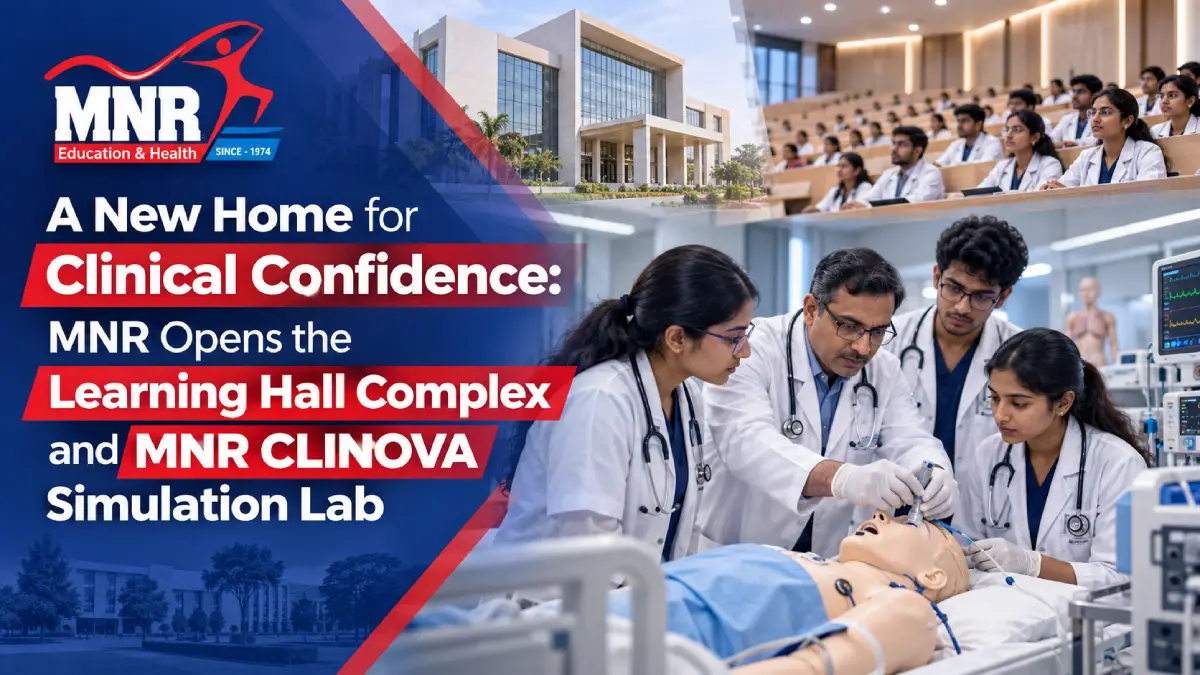
A New Home for Clinical Confidence: MNR Opens the Learning Hall Complex and MNR CLINOVA Simulation Lab
On Thursday, 17 September 2026, in its Silver Jubilee year, MNR Medical College & Hospital…
TSDC 2026 and the New Direction of BDS Colleges in Telangana
Introduction The Telangana State Dental Conference (TSDC), held recently in Hyderabad, witnessed significant participation, with…